
Connecticut summers can bring hot, humid weather that makes your home feel uncomfortable, especially during July and August. When outdoor temperatures climb into the 80s or 90s, it can be tempting to turn your thermostat down as far as possible.
However, there is no guarantee that the lower you set your air conditioner, the faster your home will cool. It may make your energy consumption higher, utility bills higher, and place undue burden on your HVAC system.
One commonly discussed guideline for hot weather is the 20-degree rule. This rule is simply stated to maintain the indoor temperature approximately 20 degrees Fahrenheit below the outdoor temperature. Although it is not a mandatory condition of all home or air conditioning systems, it can be a good starting point to keeping the comfort and energy efficiency.
This is how the 20-degree rule can be applied by Connecticut homeowners, as well as other thermostat tricks, on the hottest summer days.
What Is the 20-Degree Rule for Air Conditioning?
The 20-degree rule is a rule of thumb when it comes to controlling your thermostat in hot weather. It recommends that your air conditioner usually keep the indoor temperature no less than approximately 20 degrees Fahrenheit lower than the outdoor temperature.
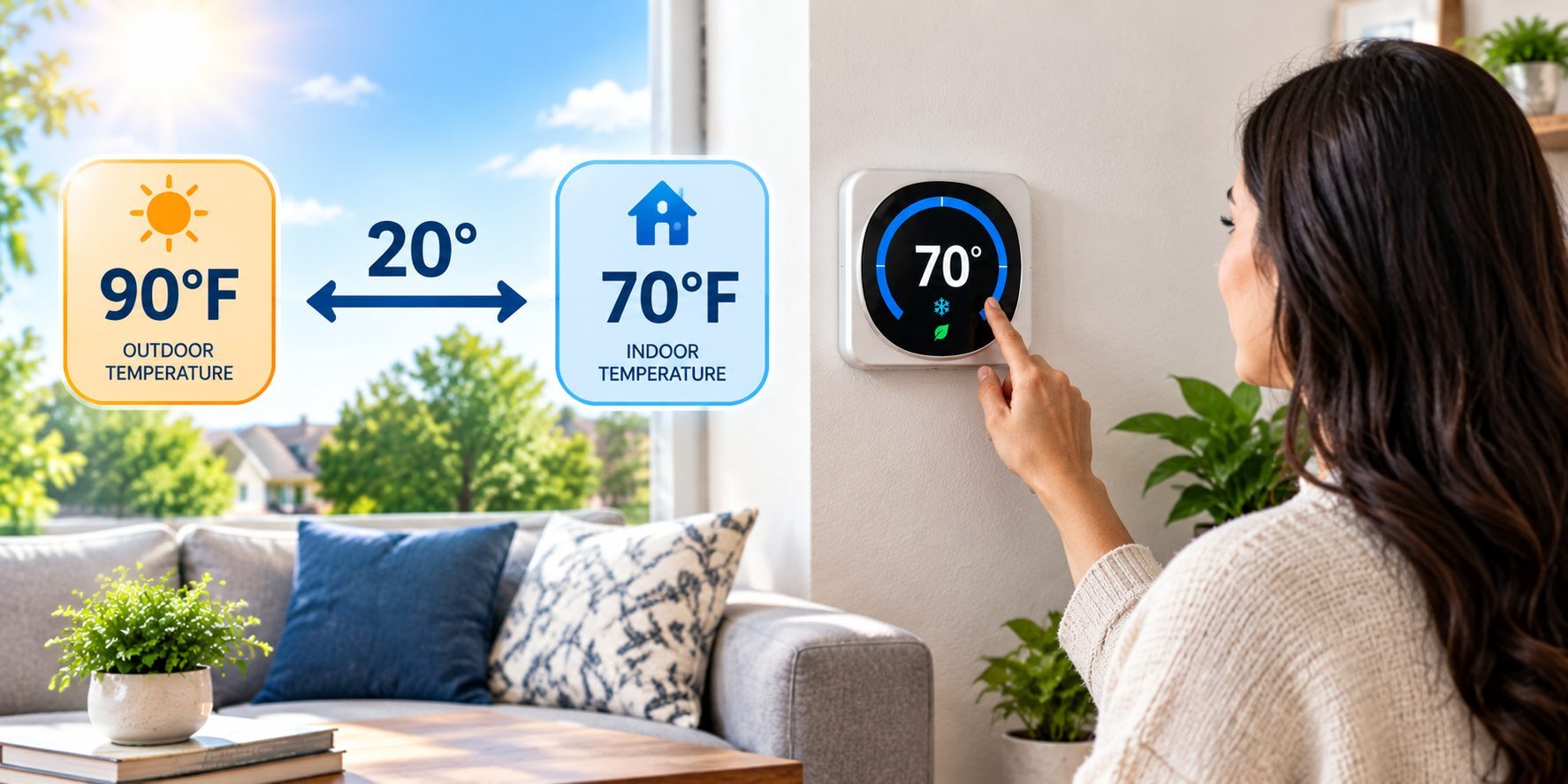
For example:
When the temperature outside is 90°F, an indoor temperature of 70°F will feel a difference of 20 degrees.
At 85°F outside, an indoor temperature of 65°F would technically be in compliance with the rule.
But that does not imply that you should turn your thermostat to 65°F just because it is 85°F outside. A thermostat setting that low may be uncomfortable and could cause your air conditioner to run longer than necessary.
A summer thermostat setting of mid-to-upper 70s can be more comfortable and efficient to many homes. The 20-degree rule should be considered as a guideline and not a strict rule.
Choose a Comfortable Summer Thermostat Setting
The optimal thermostat temperature is determined by various factors, such as the preferences of your home, the humidity, insulation, exposure to sunlight, and HVAC.
On the hottest summer days in Connecticut, most homeowners discover that a thermostat setting of about 75°F to 78°F gives them a comfortable feel at home.
The U.S. Department of Energy typically advises to set your thermostat as high as comfortably allowed in summer with air conditioning being used effectively. Cooling can be decreased by simply turning up the thermostat a few degrees.
When 78°F seems too hot, set the thermostat to 76°F or 77°F instead of turning it down to 68°F or 70°F. Your air conditioner will not necessarily cool your house quicker just because you have chosen a far lower temperature. Rather, the system can be operated continuously consuming significantly more energy.
These adjustments can be easier with a programmable or smart thermostat that will automatically adjust the temperature according to your day-to-day routine.
Why Connecticut’s Humidity Matters
Temperature is only part of the comfort equation during a Connecticut summer. High humidity can make warm indoor air feel significantly hotter and more uncomfortable.
Your air conditioner removes heat and a little moisture in the air inside your house when it is on. When the thermostat is turned down to the lowest possible, though, your system might run longer than it needs to. This may raise the energy usage without necessarily giving the most overall comfort.
A well-maintained HVAC system must be capable of regulating temperature as well as assist in regulating indoor humidity. Proper ventilation, good insulation, sealed windows, and proper air circulation may also make your home feel cooler without having to have the thermostat set extremely low.
When your house feels damp when the thermostat is set to the temperature you want, the issue might be with humidity control, airflow, equipment size, or some other HVAC problem and not just a lower thermostat setting.
Avoid Large Thermostat Adjustments
One common mistake during a Connecticut heat wave is making dramatic thermostat changes.
To illustrate, when you are away and your house is 82°F, you may be tempted to turn the thermostat to 65°F when you are back. Nonetheless, it does not cause the air conditioner to cool the home at a faster rate.
The system will be operated until the indoor temperature reaches the set point.
Instead, you should select a realistic target temperature and have your HVAC system slowly restore the home to a comfortable temperature.
You can also minimize heat gain indoors by:
- Shutting blinds and curtains when it is hottest in the day.
- Closing the doors and windows when the air conditioner is on.
- Distributing air by use of ceiling fans.
- Closing air leaks that are evident around doors and windows.
When it gets hot, allow your system to cool. When the thermostat is programmed to 76 degrees and you find that your home is still unusually hot hours later, then it might be a sign of an HVAC performance or home-efficiency issue.
Use a Smart Thermostat to Save Energy
A smart thermostat will help to control the summer temperature much easier. You do not have to manually adjust the thermostat all day long, but you can make a cooling schedule depending on when your family is at home, asleep, or away.
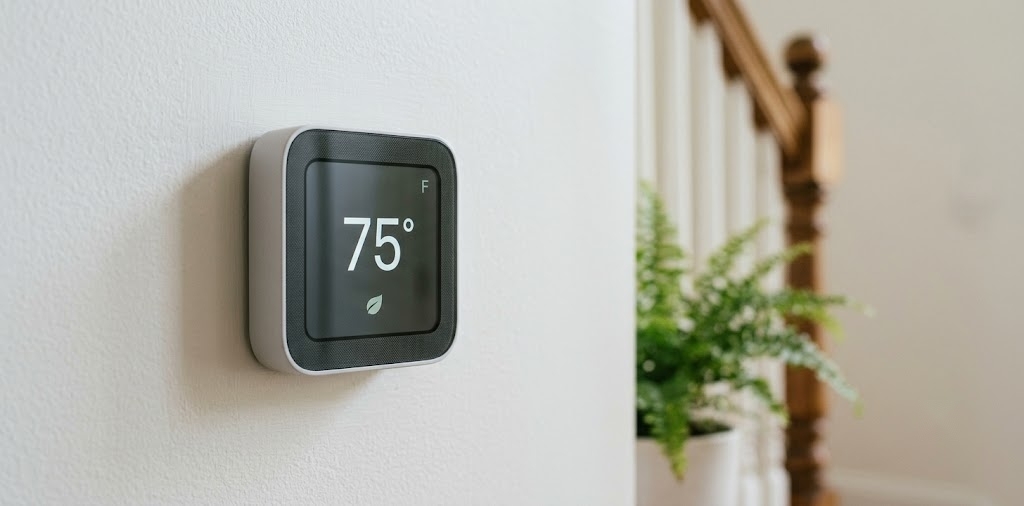
For example, you might:
- Maintain the house at 78°F when no one is at home.
- Reduce the temperature to 75°For 76°F before going home.
- Raise the temperature a little at night when the conditions outdoors are more comfortable.
Most smart thermostats are also capable of giving energy-use data, temperature notifications, and scheduling. These instruments can assist you in knowing how your cooling patterns at home influence energy use.
The trick is to do small adjustments instead of always adjusting the temperature by big steps.
Help Your AC Work Efficiently During Heat Waves
Start by checking your air filter regularly and replacing it when it becomes dirty. A clogged filter can restrict airflow and make your system work harder.
In addition, maintain supply and return vents free of furniture, curtains and other barriers.
It is important to schedule professional HVAC maintenance before the peak cooling season. A skilled technician is able to check the system, airflow, electrical parts, and find possible issues before they turn out to be significant failures.
To decrease indoor heat, you can also:
- Closing blinds when there is direct sunlight.
- Using ceiling fans to improve air circulation.
- Covering apparent air leaks around the doors and windows.
- Replacing your air filter and ensuring that it is installed correctly.
- Making sure supply and return vents are unobstructed.
These simple steps can help your air conditioner operate more efficiently when outdoor temperatures rise.