Your home’s ductwork plays an important role in keeping indoor spaces comfortable throughout the year. HVAC ducts carry heated or cooled air from your heating and cooling system to different rooms. When ductwork becomes damaged, cracked, disconnected, or poorly sealed, your HVAC system may have to work harder to maintain the desired temperature.
Damaged ducts may also add to energy bills, decrease indoor comfort, and impact indoor air quality. However, ductwork can be concealed behind walls, ceilings, floors or in attics and issues can be hard to detect.
Being aware of the warning signs will enable you to detect the possible problems before they become more costly to fix.
Here are 10 common signs of damaged ductwork that homeowners should watch for.
Uneven Temperatures Throughout Your Home

One of the most noticeable signs of damaged ductwork is inconsistent temperatures between rooms. You might discover that one bedroom is comfortable and the other room is unusually cold despite your thermostat being adjusted to the same temperature.
This may occur when the air leaks out through holes, cracks or unconnected parts of ductwork before it reaches its intended destination. Obstructed or ineffective ducts may also be a cause of uneven airflow.
Higher-Than-Normal Energy Bills
When your energy bills suddenly or without any reason start to rise, it can be a sign that something is wrong with your ductwork. When conditioned air is leaking out of ducts, your HVAC system will have to operate longer to reach the temperature that you have set on the thermostat.
Leaky ducts may squander heated or cooled air, decreasing the overall HVAC performance. Consequently, your system can end up using more energy than required.
Weak Airflow From Vents
Weak airflow in your supply vents is another typical symptom of ductwork issues. Once you activate your HVAC system, you are supposed to experience a constant stream of conditioned air through the vents.
The airflow can be weak due to damaged, crushed, disconnected, clogged, or leaking ducts. Poor airflow can also be caused by a problem with the HVAC equipment itself, and thus a professional check is necessary to find out the precise cause.
Strange Noises From Your Ducts
Your ductwork may make occasional noises as metal expands and contracts, but unusual or persistent sounds can indicate a problem.
Ducts can be loose or disconnected and make a rattling, banging, whistling, or popping noise. Whistling may also be a sign of air escaping through a hole or an improperly closed joint.
Excessive Dust in Your Home
When your house appears to be dusty even after you clean it, it might be damaged ductwork that is adding to the issue. Ducts may have cracks and openings that permit the entry of dust, dirt, insulation particles and other contaminants into the system.
High dust levels do not necessarily imply that your ducts are in bad condition, as there are a number of other variables which can influence the amount of dust in the air. Nevertheless, the presence of dust persistently and other warning signs can be the reason to consider a professional duct inspection.
Unusual Odors Coming From Air Vents
Bad or strange odors in your vents can also be an indication of ductwork issues. Damaged ducts can allow contaminants from attics, crawl spaces, or other areas to enter the air distribution system.
Stale or dusty smells can be caused by other factors, but musty smells can be related to the presence of excess moisture or microbial growth.
If an unusual odor continues after changing your HVAC filter and cleaning accessible components, consider having the ductwork and HVAC system professionally evaluated.
Visible Damage to Ductwork
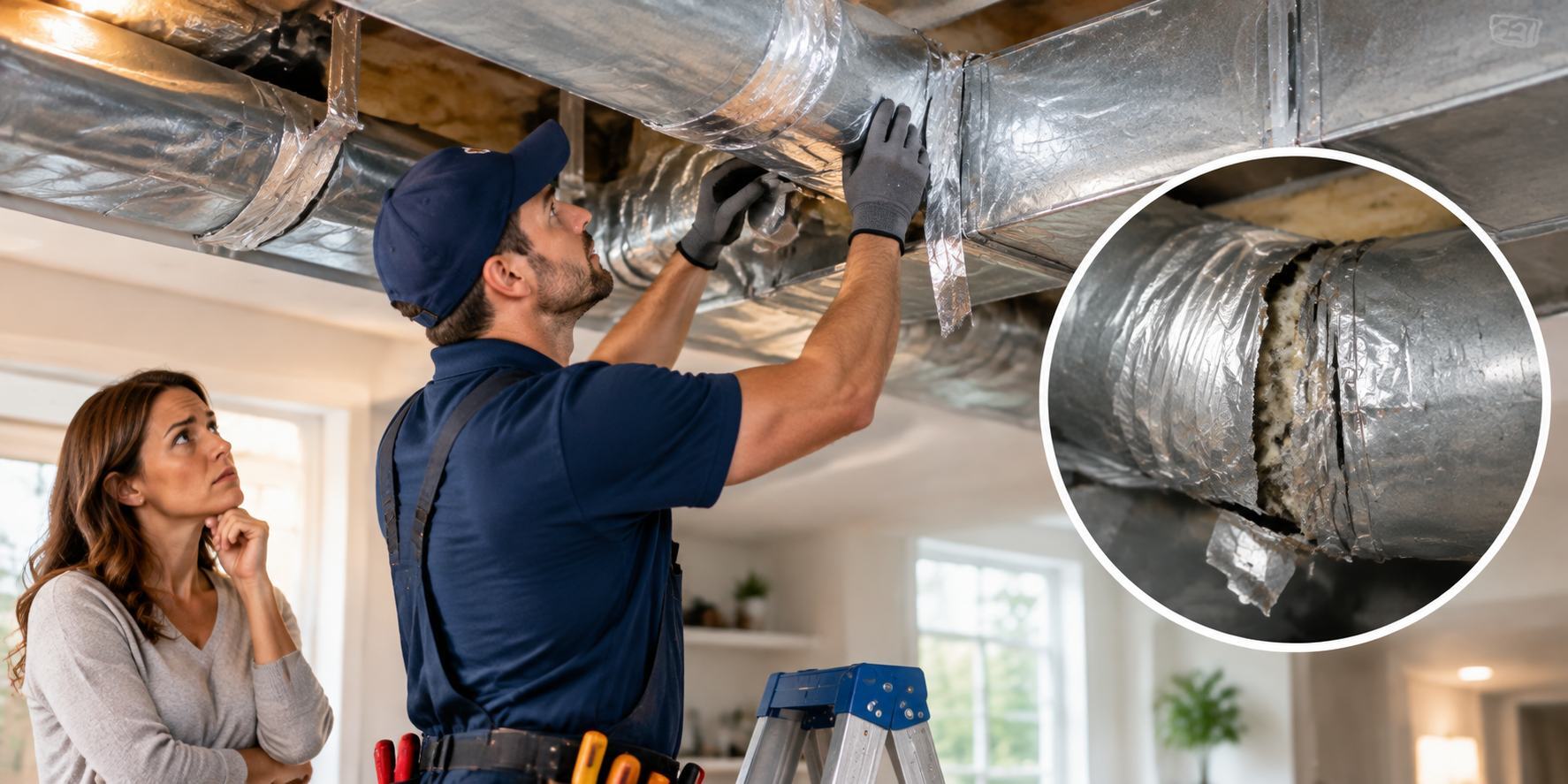
Sometimes, ductwork problems are easy to spot. Assuming that you have access to ducts in an attic, basement, crawl space, or utility area, see whether you can find visible evidence of damage.
These may include:
- Torn flexible ducts
- Crushed sections
- Disconnected joints
- Gaps around connections
- Damaged insulation
- Obvious holes.
Do not try to fix hard-to-reach ductwork yourself, particularly when it is in a tight or hazardous space. The decision to seal, repair, insulate, or replace the affected section can be made by a qualified HVAC professional.
Excessive Moisture or Condensation
Moisture around ductwork can be another warning sign. Condensation may develop when warm, humid air comes into contact with a cold duct surface, particularly when insulation is inadequate or damaged.
When you observe water stains, wet insulation, condensation, or moisture around your ducts, find out what is causing it. The problem can be the insulation of the ducts, air leakage, humidity, or any other HVAC issue.
Your HVAC System Runs Constantly
Does your air conditioner or furnace seem to run almost continuously without reaching the desired temperature? Damaged or leaky ductwork may be part of the problem.
When conditioned air escapes before reaching the rooms, the HVAC system may have difficulty maintaining the thermostat setting. This may result in extended operating times and energy usage.
Nevertheless, the constant running may also be caused by an undersized or old HVAC system, dirty filters, lack of insulation, extreme weather conditions outside or thermostat issues. An HVAC assessment can be conducted in order to determine the real cause.
Duct Sealing or Repairs Keep Coming Up
When your HVAC system starts to have airflow problems repeatedly or needs duct repairs, it might be that there is a bigger problem. Old ductwork may wear out with age, especially in regions that are subjected to heat, moisture, pests, or physical forces.
Repeated repairs may indicate that certain sections have reached the end of their useful life. In some situations, replacing damaged ductwork may be more practical and cost-effective than continually repairing individual sections.
An expert HVAC technician will be able to examine the complete duct system and advise on whether it is better to seal, repair, or insulate or replace the system.
Why Damaged Ductwork Should Not Be Ignored
Broken ductwork may not only impact comfort. Leaks, faulty connections may lower the efficiency of the HVAC, raise the amount of energy used, and complicate the ability to keep the temperatures inside at a constant level. In other cases, broken ducts may also be a source of indoor air quality issues.
The earlier you detect ductwork issues, the more it can be done to resolve them before they cause more serious HVAC problems. Homeowners can detect possible issues early by regularly maintaining their HVAC systems and having ducts inspected regularly.
If you notice several of the signs above, consider contacting a qualified HVAC professional for an inspection. Properly sealed, insulated, and well-maintained ductwork helps your heating and cooling system deliver conditioned air more efficiently throughout your home.