
An air conditioner consists of various significant parts that combine to ensure that your home is comfortable, and the AC condensing unit is one of the most crucial elements. Regardless of whether you have a central air conditioning system or a heat pump, the condensing unit has a significant role to play in eliminating heat in your home and keeping the inside cool.
Learning about the definition of an AC condensing unit, its functioning, average price, and frequent repair problems can enable house owners to make more informed choices regarding maintenance, replacement, and repair.
What Is an AC Condensing Unit?
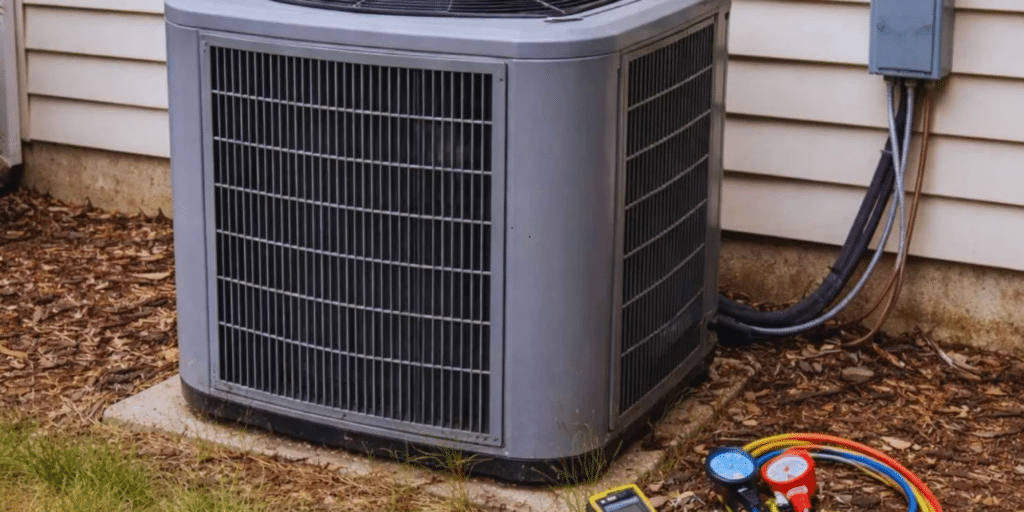
The outdoor unit of a central air conditioning system is an AC condensing unit. It is typically placed outside the house and has a few important parts such as the compressor, condenser coil, fan motor and electrical parts.
The primary intention of the condensing unit is to get rid of the heat that has been gathered in your home. As the cooling process occurs, the air in your house is cooled by the indoor evaporator coil. This heat is then transferred to the outdoor condensing unit by the refrigerant which is expelled to the outside air.
The condensing unit is occasionally referred to simply as the out-of-doors AC unit since it is placed outside and is used in conjunction with the indoor air handler or furnace to complete the cooling process.
How Does an AC Condensing Unit Work?
The AC condensing unit works through a continuous refrigeration cycle.
Here is a simple breakdown of the process:
Refrigerant Absorbs Indoor Heat
The cooling process starts within your home. Warm air flows over the evaporator coil where the refrigerant takes up heat of the air. The cooled air is then pumped through your home using the duct system.
Compressor Increases Refrigerant Pressure
The refrigerant is pumped to the outside condensing unit. The compressor raises the pressure and temperature of the refrigerant inside the condensing unit and then passes through the condenser coil.
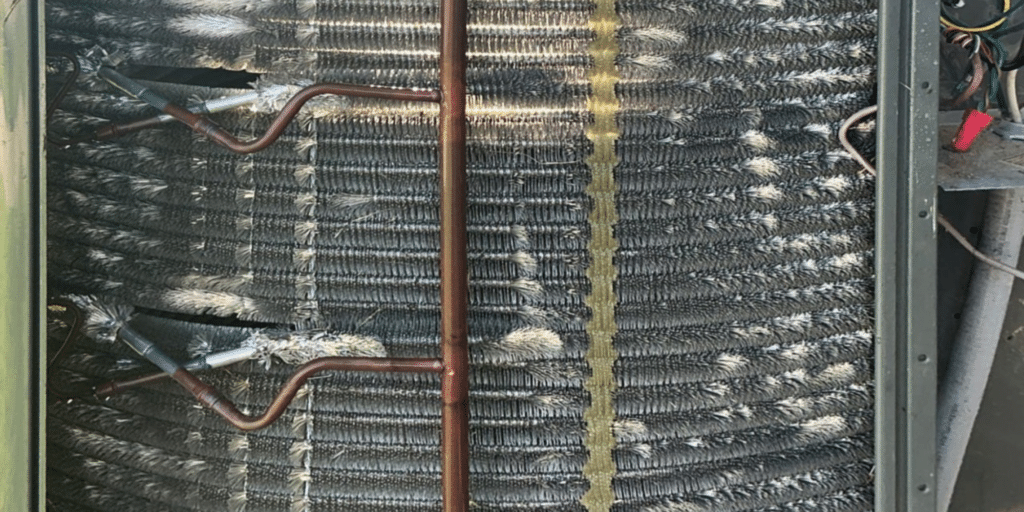
Condenser Coil Releases Heat
The hot refrigerant passes through the condenser coil; the air is blown over the coil by the outdoor fan to cool the coil. The refrigerant turns back into a liquid as the heat is lost.
Refrigerant Returns to the Indoor Unit
The refrigerant is cooled and is pumped back into the indoor evaporator coil and the cooling cycle repeats itself. This will go on until your thermostat has reached the desired temperature.
Main Components of an AC Condensing Unit
An AC condensing unit consists of a number of components which collaborate to offer effective cooling.
Compressor
The compressor is said to be the heart of the condensing unit. It forces the refrigerant into the system and raises its pressure to enable the removal of heat. A broken compressor may lead to significant AC issues and can be costly to repair or replace.
Condenser Coil
The condenser coil assists in the removal of heat in the refrigerant. The accumulation of dirt, dust, and debris on the coil may decrease the cooling efficiency and raise the energy expenses.
Condenser Fan Motor
The fan motor drives the outdoor fan that circulates air over the condenser coil. Failure of the fan motor can result in overheating of the unit and the inability to cool effectively.
Electrical Components
The control of the condensing unit is assisted by capacitors, contactors, wiring and circuit boards. One of the most frequent causes of the failure of an outdoor AconditioningC unit is electrical failures.
How Much Does an AC Condensing Unit Cost?
The price of an AC condensing unit varies based on a number of factors such as the size of the unit, brand, efficiency rating, and installation needs.
The equipment alone can cost between $1,500.00 and $4,000.00 on average. With professional installation, the cost can be between $3,000.00 and $7,000.00 or above.
Several factors affect the final price:
Unit size: Bigger homes will have higher capacity units, which are more expensive.
Energy efficiency: The models with high efficiency and higher SEER ratings tend to be more expensive upfront, but can save on energy expenses.
Brand: Premium HVAC brands tend to be more expensive due to the presence of more advanced features and extended warranty.
Complexity of installation: The cost of replacement can be higher when electrical work, refrigerant lines, or other system upgrades are required.
Common AC Condensing Unit Problems and Repairs
Similar to any mechanical device, an AC condensing unit may have issues with time. Most of the problems can be avoided through regular maintenance, yet there are certain repairs that cannot be avoided.
AC Condenser Is Not Turning On
In the event that the outdoor unit fails to start, it may be due to a tripped circuit breaker, faulty thermostat, damaged capacitor, or electrical problem. The exact cause can be diagnosed by a professional HVAC technician.
Condenser Fan Problems
The damaged fan blade or a malfunctioning fan motor may not allow the air to flow through the condenser coil properly. This may lead to overheating of the system and lowering the cooling efficiency.
Dirty Condenser Coil
A coil that is dirty complicates the release of heat by the unit. A typical maintenance procedure is to clean the condenser coil to ensure higher efficiency and prevent failure.
Refrigerant Leaks
Reduced refrigerant levels may lead to ineffective cooling, formation of ice, and strain on the compressor. A qualified HVAC professional should repair refrigerant leaks since the refrigerant needs special equipment and training to handle.
Compressor Failure
One of the costly AC repairs is compressor issues. In case of a compressor failure, the homeowners might have to weigh the cost of repair against the cost of a new condensing unit.
AC Condensing Unit Repair Cost
The cost to repair an AC condensing unit varies depending on the damaged component and the complexity of the repair. Simple fixes, like changing a capacitor or contactor, can be a few hundred dollars. More severe repairs like that of a compressor will be much more expensive.
Common repair expenses can be:
Capacitor replacement: $150–$400
Fan motor replacement: $300–$700
Repair and recharge of refrigerant leak: $200-$1,500.
Replacement of compressor: $1,000-$2,500 or more.
The most effective method to find out whether it is more cost effective to repair or replace the unit is by a professional inspection.
Tips to Maintain Your AC Condensing Unit
With proper maintenance, you can increase the life of your AC condensing unit and enhance performance of the system.
Homeowners should:
- Maintain the vicinity of the outdoor unit free of leaves, grass, and debris.
- Clean the coil of the condenser.
- Change air filters as per the manufacturers.
- Have HVAC serviced at least once a year.
- Watch out for abnormal sounds, decreased cooling, or increased utility bills.
Routine maintenance will make your system run smoothly and minimize the possibility of unplanned failures.