
Air conditioning systems are based on a number of electrical elements to work safely and efficiently, and the AC fuse is one of the most significant. The fuse is a safety device that prevents electrical damages by preventing the excessive flow of current through the system.
A fuse can blow, which will cause the air conditioner to cease operation or have performance problems.
Being aware of how to tell whether an AC fuse is blown can assist homeowners to diagnose problems at an early stage and to decide whether a simple fuse replacement is required or whether a bigger electrical problem exists.
In this guide, you’ll learn the common signs of a blown AC fuse, how to inspect it safely, and when professional assistance may be required.
What Is an AC Fuse and Why Is It Important?
An AC fuse is a safety device that helps to guard against electrical overloads and short circuits of the air conditioning unit. It is usually found in the disconnect box close to the outdoor condenser unit or within the electrical panel of the system.
The fuse melts or interrupts the circuit when the electrical current is too high, avoiding the destruction of costly parts of the compressor, capacitor, or circuit board. Although a blown fuse is a safety measure to the system, it also prevents the air conditioner from running until the problem is fixed.
Understanding the role of the fuse is the first step in diagnosing air conditioning problems and preventing costly repairs.
Signs Your AC Fuse May Be Blown
Warning signs are one of the simplest methods of detecting a blown AC fuse.
Common symptoms include:
- The air conditioner will not turn on.
- The outdoor condenser unit is not running.
- The thermostat seems to be functioning, but the system is not responsive.
- Warm air is blowing from the vents instead of cool air.
- The circuit breaker is not tripped, but the AC is off.
- Unexpected system failure.
These indications do not necessarily indicate a blown fuse but they are usually the initial indications that there might be an electrical problem.
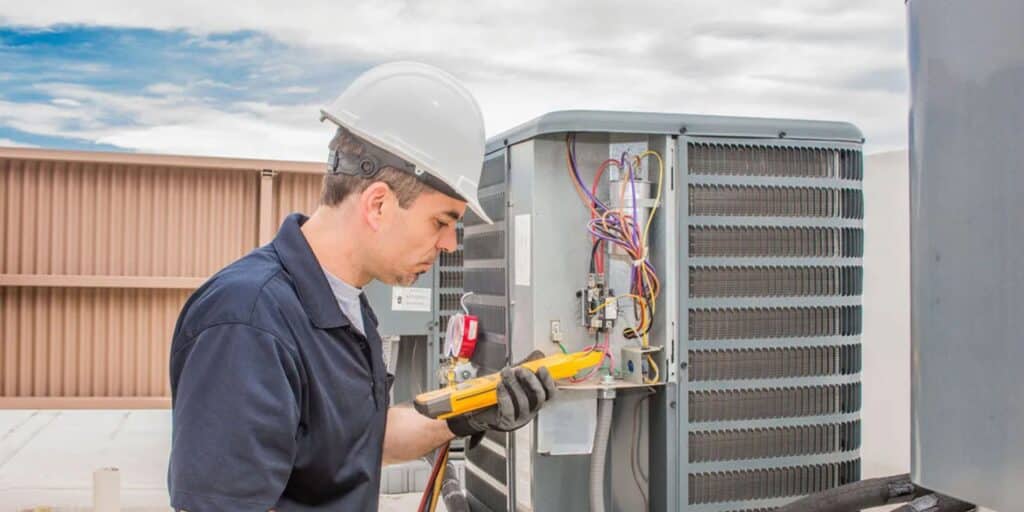
Check Whether the Outdoor Unit Is Running
An outdoor condenser unit is the one that gets rid of the heat in your home. When the indoor fan is on and the outdoor unit is not making any noise, then a blown fuse may be the cause.
Go close to the outside unit and hear. When a condenser is working, it should make a continuous humming noise. When no sound is heard and no movement of the fan is observed, the fuse might have cut off power to the unit.
Check that the thermostat settings are correct and the circuit breaker has not tripped before concluding that the fuse is the problem.
Inspect the Disconnect Box
The majority of central air conditioning systems have a disconnect box that is mounted close to the outside unit. The AC fuses are housed in this box and can be used as a safety shutoff point during maintenance or emergencies.
Switch off power to the system and then open the disconnect box. After opening, ensure that you remove the fuse carefully and examine it visually.
Depending on the type of fuse, you can observe:
- Burns or discolouration.
- A broken metal filament in the fuse.
- Signs of melting or damage.
- A dark or smoky look.
Fuse may have blown and the visible damage is usually a good indication that the fuse needs replacement.
Use a Multimeter to Test the Fuse
The surest method of knowing whether an AC fuse is blown is by use of a multimeter. After safely removing the fuse, set the multimeter to the continuity or resistance setting.
Touch one probe to both ends of the fuse. A live fuse will normally indicate continuity or a very low resistance reading. When the meter shows no continuity or infinite resistance value, the fuse has broken.
Multimeter testing removes guesses and verifies the functionality of the fuse.
Common Reasons an AC Fuse Blows

When a blown fuse is replaced without fixing the cause, it may lead to recurring failures.
A blown AC fuse may be caused by several problems such as:
- Storms or power outages.
- Short circuiting in the air conditioning system.
- Defective capacitors or contactors.
- Compressor problems that draw excessive current.
- Loose or damaged wiring connections.
- Aging electrical components.
When the fuse blows soon after replacement, it is advisable to have a professional check to determine and fix the cause.
Can You Replace a Blown AC Fuse Yourself?
Homeowners with a basic understanding of electrical knowledge can easily replace an AC fuse in most instances. Nevertheless, safety must be the number one priority.
Prior to changing the fuse:
- Switch off the air conditioner.
- Check the appropriate fuse rating.
- Replace with a similar fuse.
- Check the fuse holder to see whether it is damaged.
- Re-power and test the system.
Do not install a fuse of higher amperage than the recommended one. This may subject the air conditioning system to severe electrical risks and pose possible safety risks.
In case you do not feel comfortable working with electrical parts, it is the best to call an HVAC technician.
When to Call an HVAC Professional
Although a blown fuse could be a minor issue, frequent fuse failures can be a sign of a more serious issue.
Professional help is suggested when:
- Substitute fuse blows instantly.
- You smell burning or see wire damage.
- Compressor fails to start.
- Air conditioner repeatedly shuts down.
- If you are not comfortable with electrical troubleshooting.
A skilled HVAC technician is able to conduct sophisticated diagnostics, detect electrical malfunctions, and make sure that the system is safe and efficient.