Air conditioning systems play a major role in keeping homes comfortable, especially during the hot summer months. When an AC unit malfunctions, it may soon transform a home into a home that is not comfortable. Learning the process of air conditioning repair can assist homeowners to identify the issues that are likely to occur, when to call a technician, and even avoid costly breakdowns in future.
This guide explains the air conditioning repair process in a simple and easy-to-understand way. Diagnosing common problems to replacing damaged components, here is all you need to know about the process of repairing air conditioning units.
Understanding How an Air Conditioning System Works
It is always good to know the fundamentals of the working of an air conditioning unit before knowing how it can be repaired. An AC system eliminates the heat in the indoor air and moves it to the outside.
The key elements in this process are:
- Compressor
- Condenser coil
- Evaporator coil
- Refrigerant
- Thermostat
- Air filters
- Fan motors
When any of these elements fail to work properly, the whole system might not be able to cool the house appropriately.
Common Signs Your Air Conditioner Needs Repair
It is common to find that many homeowners do not pay much attention to minor warning signs until the system breaks down. Early detection of symptoms can avoid bigger and costly repairs in the future.
A few of the typical symptoms are:
- Hot air coming out of vents
- Weak airflow
- Strange noises
- Unpleasant odors
- Higher energy bills
- Cycling on and off.
- Leaks of water around the unit.
When any of these issues arise, then it is normally time to check the air conditioning system.
The Air Conditioning Repair Process
HVAC technicians are professional and use a step-by-step approach to detect and resolve issues. Diagnosis is also essential since most AC problems may share similar symptoms.
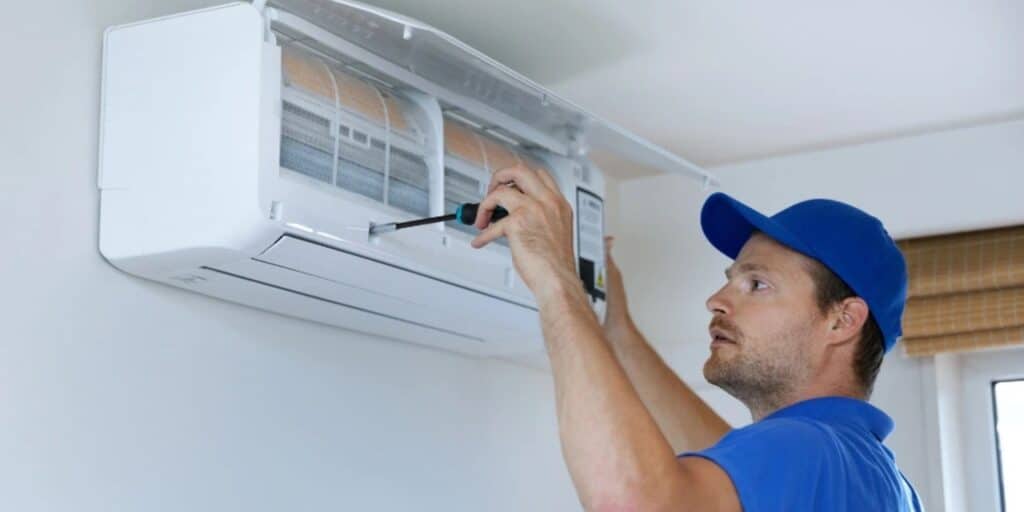
Inspecting the Thermostat
The first step in the repair process is usually to check the thermostat. In other cases, the problem can be as basic as improper settings, dead batteries, or bad wiring.
Technicians verify that:
- The thermostat is turned to the cooling mode.
- The thermostat is adjusted appropriately.
- Electrical connections are secure.
- The thermostat is compatible with the AC unit.
In case the thermostat is broken, changing it can be an instant solution.
Checking the Air Filter
One of the most prevalent causes of air conditioning problems is dirty air filters. Air flow is limited when filters are clogged with dust and debris.
A technician will:
- Take out and check the filter.
- Wash or change soiled filters.
- Check for airflow restrictions.
Changing a dirty filter can enhance the cooling efficiency and strain on the system.
Examining the Refrigerant Levels
The substance that cools the air is called refrigerant. A low level of refrigerant normally means that there is a leak in the system.
In this repair procedure, technicians:
- Measure refrigerant pressure
- Find leaks with special equipment
- Repair damaged refrigerant lines
- Refill the system with the appropriate amount of refrigerant.
Poor cooling performance and frozen evaporator coils may result due to low refrigerant, and therefore, this repair is necessary.
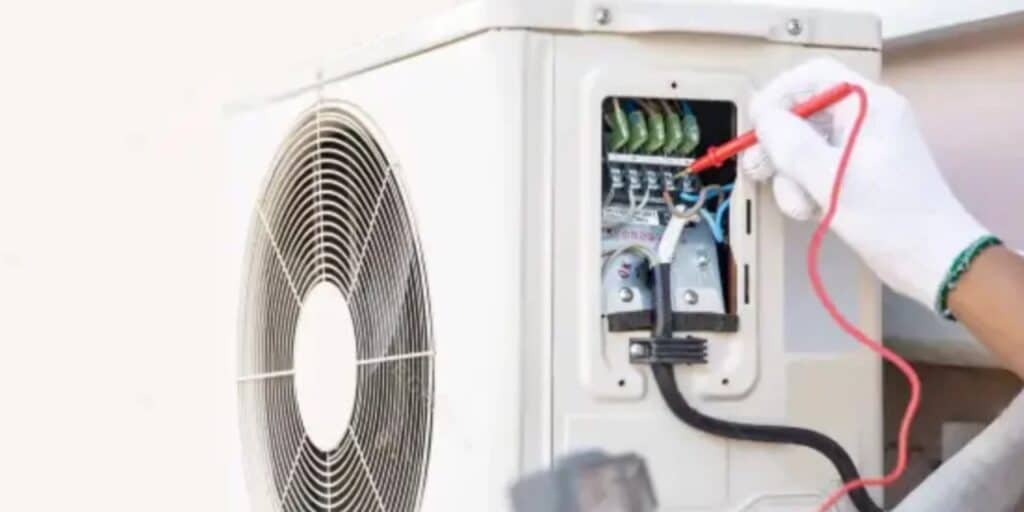
Repairing Electrical Components
Air conditioning systems are very dependent on electricity. The system may not be able to operate safely due to faulty wiring or failed parts.
Capacitor Replacement
Capacitors are used to start and operate the motors within the AC unit. They may wear out with time as a result of heat and overuse.
Signs of a bad capacitor include:
- Clicking sounds
- Difficulty starting
- Sudden shutdowns
Technicians also test capacitors using electrical equipment and change them when needed.
Contactor Repairs
The contactor is used to regulate the flow of electricity to the system. In case it is damaged or burnt, the AC might not start.
One of the common air conditioning maintenance and repair tasks is repairing or replacing a contactor.
Fixing Wiring Problems
Damaged or loose wires may cause safety hazards and system failures. HVAC technicians check electrical connections to make sure that the system works safely and efficiently.
Repairing or Replacing Fan Motors
Fan motors are used in air conditioners to circulate air. When the fan motor malfunctions, the airflow is weak or ceases.
Typical fan motor problems are:
- Motor overheating
- Worn bearings
- Electrical failure
- Broken blades
Technicians check the motor, lubricate moving parts where necessary, and change damaged parts where necessary.
Fixing Drainage Problems
When air conditioning is used, it generates condensation. This water evaporates via a condensate line. In case of clogging of the drain, water can leak into the house.
Condensate Drain Cleaning
Technician’s clear blockages due to:
- Dirt
- Mold
- Algae buildup
Drain line cleaning prevents damage of water and enhances the performance of the system.
Compressor Repair and Replacement
One of the most crucial and costly components of an air conditioning system is the compressor. It pumps refrigerant all over the unit.
Compressor failure is indicated by:
- Loud noises
- Warm air
- Frequent tripping of breakers
- Failure to start
Technicians can fix electrical connections or change the whole compressor depending on the extent of the damage.
In older systems, it can be more cost-effective to replace the entire AC unit than it is to replace the compressor.
Preventing Future Air Conditioning Repairs
One of the most effective methods of minimizing the cost of repair and increasing the life of an air conditioning unit is preventive maintenance.
Schedule Regular Maintenance
Professional AC maintenance is to be done at least once in a year. Technicians are able to detect minor problems during maintenance visits before they turn out to be big repairs.
Replace Air Filters Frequently
Replacing filters after every one or three months enhances air flow and maintains the system in good operation.
Keep the Outdoor Unit Clean
To ensure that the air flows properly, homeowners are advised to clear leaves, grass and debris around the outdoor condenser unit.
Watch for Warning Signs
Neglecting strange sounds or ineffective cooling may result in larger issues. Repairs that are done early are normally cheaper than the system failures.
Why Professional AC Repair Matters
Although certain minor repairs may be done by homeowners, the majority of air conditioning repairs involve professional skills. HVAC technicians possess the special tools, training, and experience to diagnose issues and fix systems safely.
Trying to do complicated repairs without the necessary knowledge may:
- Damage the system further
- Void warranties
- Create electrical hazards
- Lead to refrigerant leaks.
By employing an experienced technician, the repair will be done in a proper and safe manner.