The quality of indoor air contributes significantly to a healthy and comfortable living environment. Air pollutants such as dust, pollen, pet dander, smoke, and others may build up indoors in homes and offices and impact the air you breathe on a daily basis. This is the reason why air purifiers are gaining popularity.
Among the many types available, HEPA and electrostatic air purifiers are two of the most common options. Understanding their differences can help you choose the right solution for your needs.
What Is a HEPA Air Purifier?
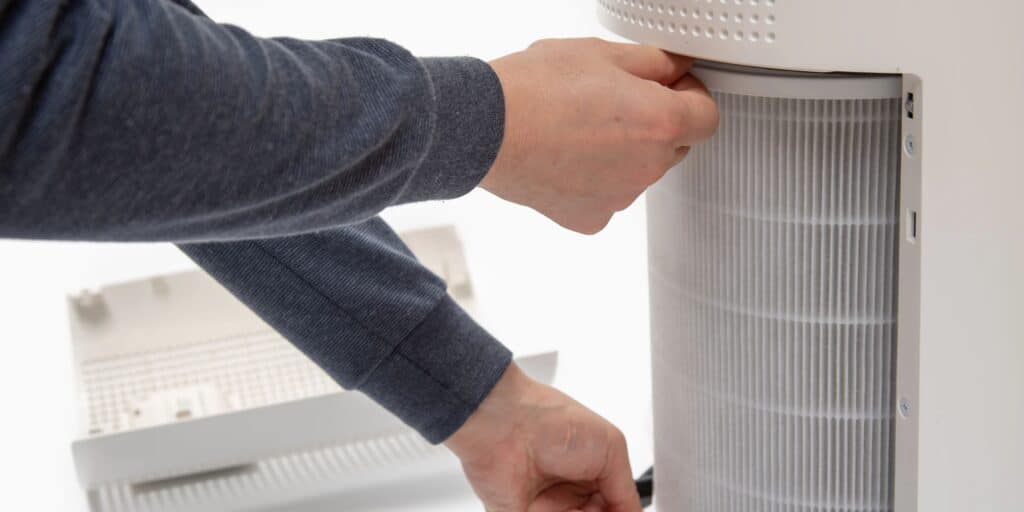
HEPA (High-Efficiency Particulate Air) air purifier is an air purifier that utilizes a dense mechanical filter to trap airborne particles as air passes through it. HEPA filters are very efficient in capturing microscopic pollutants, such as dust, pollen, mold spores, pet dander, and some bacteria.
The fibers that are closely knit together within the filter trap particles of different sizes, which do not re-enter the room. Due to their high filtration efficiency, HEPA air purifiers are common in homes, health care facilities and work places where clean air is a concern.
What Is an Electrostatic Air Cleaner?
An electrostatic air purifier is not similar to a HEPA system. Rather than capturing particles in a thick filter, it captures and collects airborne contaminants with an electrical charge.
When air passes through the purifier, the particles are charged with electricity and then attracted to the collection plates that are of opposite polarity. These plates trap the pollutants and then the purified air is discharged into the room. Other electrostatic models are reusable collection plates, which may eliminate the need to change filters frequently.
Filtration Performance and Air Cleaning Efficiency
Filtration performance is usually the most significant factor when comparing HEPA vs electrostatic air purifiers.
HEPA air purifiers are distinguished by their outstanding capacity to eliminate fine particles in the air. They are able to trap very tiny pollutants that can cause allergies or breathing problems. This renders them an option of choice to people who desire to have the best particle removal.
Air purifiers that use electrostatics can also be used to eliminate airborne particles, although their performance can be affected by the design, maintenance, and airflow conditions. Although they are effective with larger particles like dust and pet hair, not all models are effective in capturing ultrafine particles as well as the HEPA systems.
HEPA filtration tends to be more robust and consistent in performance in households that have to deal with allergies, asthma, or high concentrations of airborne pollutants.
Maintenance Requirements and Operating Costs
HEPA air purifiers need to have their filters replaced periodically. Depending on the usage, filters can be replaced after every few months or year. Although replacement filters increase the total cost of ownership, they contribute to the overall performance of filtration.
Electrostatic air purifiers often use washable collection plates instead of disposable filters. These plates can be washed and reused several times by users, potentially lowering the maintenance costs in the long run. Nonetheless, cleaning should be done regularly since dirt will reduce efficiency in the long run.
An electrostatic purifier can be attractive in case you do not mind regular cleaning and want to keep the costs as low as possible. When the priority is to achieve the maximum filtration performance, the cost of replacing the filters of the HEPA systems is justified by many users.
Noise Levels and Energy Consumption
Most HEPA air purifiers use high power fans to force air through thick filters. Noise levels can be more pronounced as the speed of fans rises. Nevertheless, the contemporary models usually have silent modes intended to be used in bedrooms and offices.
Air purifiers that rely on dense filtration media usually have lower airflow resistance, as electrostatic air purifiers do not require such dense media. Consequently, there are models that run quieter and can use less energy.
Depending on the particular product, the actual performance will be determined, but in some cases, electrostatic systems can be appealing to users who want a quieter operation.
Which Option Is Better for Allergies and Asthma?
Individuals who are allergic or have asthma usually require an air purifier that can eliminate small particles of air that may cause symptoms.
HEPA air purifiers are usually suggested as they are very effective in trapping allergens like pollen, dust mites, pet dander, and mold spores. Their high particle removal efficiency is useful in making the indoor environment cleaner and may contribute to improved respiratory comfort.
Electrostatic air purifiers have the potential to reduce airborne contaminants but their performance may differ depending on the size of the particle. HEPA filtration is usually regarded as more reliable in people with severe allergies or respiratory sensitivities.
Pros and Cons of HEPA and Electrostatic Air Purifiers
Both technologies offer unique advantages and limitations.
Pros of HEPA Air Purifier:
- High level of particle filtration.
- Good with allergies and asthma.
- Consistent and reliable air cleaning.
- Traps a broad spectrum of air pollutants.
Cons of HEPA Air Purifier:
- Requires filter replacements
- Increased long-term maintenance.
- May generate greater fan noise.
Pros of Electrostatic Air Purifier:
- Reusable and washable collection plates.
- Reduced filter replacement expenses.
- Potentially quieter operation
- Some models are energy efficient.
Cons of Electrostatic Air Purifier:
- Models can be different in performance.
- Requires regular cleaning
- May be less effective for ultrafine particles
Which Air Purifier Is Best?
HEPA air purifiers are still the choice of most households that want to have the best air cleaning performance.
Nevertheless, even in cases where users are interested in convenience and cost-saving, electrostatic models can still be of great use.
Considering your air quality issues, budget, and maintenance preferences will assist you in deciding on the air purifier that best suits your needs.