
In modern times, when the cost of energy is increasing and people are becoming more conscious about the environment, homeowners are looking into efficient and sustainable methods of heating and cooling their homes. The geothermal heat pump is one of the most innovative and most energy saving alternatives. When you are planning to upgrade your HVAC system or construct a new home, learn what a geothermal heat pump is and how it operates to make a well-informed decision. Here in this blog, we will discuss all you need to know about geothermal heat pumps, such as functionality, advantages, and if they can be a good fit in your house.
What is a Geothermal Heat Pump?
A ground-source heat pump (GSHP), also referred to as a geothermal heat pump (GHP), is an extremely efficient method of heating and cooling the environment that utilizes the natural heat in the earth. It draws on the constant ground temperature to offer heating during the winter seasons and cooling during the summer seasons. A geothermal heat pump is used in place of the traditional heating systems whereby fossil fuels or electricity are used to produce heat for your home.
How Does a Geothermal Heat Pump Work?
A geothermal heat pump works efficiently, but the principle involved is very straightforward. The temperature of the earth is quite constant throughout the year; thus, it serves as a perfect source of cooling and heating.
A geothermal heat pump system comprises four significant parts, namely:
Ground Loop:
The ground loop is a system of pipes which are buried underground. These pipes are typically filled with a heat transfer fluid (typically water or a mixture of water and antifreeze) which is pumped through the ground absorbing or releasing heat (depending on the season).
Heat Pump Unit:
The most important component of the system is the heat pump unit which is usually housed within your home. It has a heat exchanger and compressor that makes it possible to transfer heat between ground loop and air in your home.
Ductwork:
As with a conventional HVAC system, a geothermal heat pump needs ducting to be able to spread warm or cool air throughout the house. The blower fan forces the heated or cooled air into the ducts keeping your living spaces comfortable.
Heat Exchange Process:
During winter, the system will recover the heat available in the ground, and pump it into your house. In the summer, it works the other way around, the heat pump draws the heat out of the air in your house and sends it to the ground cooling you. Geothermal heat pumps are simply phenomenally efficient all year round because the air is at a lower temperature than the ground.
Types of Geothermal Heat Pump Systems
Different geothermal heat pump systems require different installation conditions.
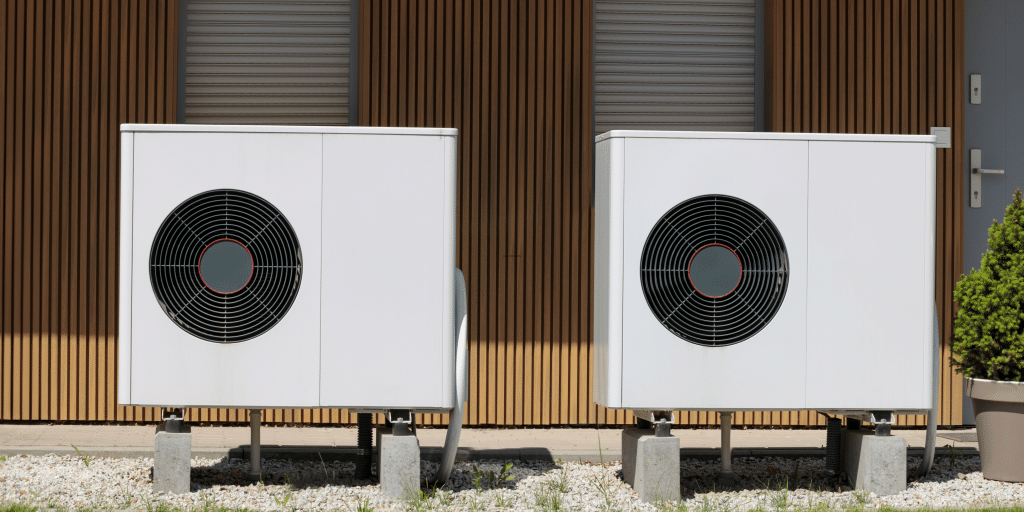
The three most frequently used ones include:
Horizontal Ground Loop Systems
Horizontal loops are used when there is an abundance of land. The pipes are placed on a trench within 4 to 6 feet of the ground. This system is also cheaper to install, compared to vertical loops, because the system does not need much drilling. Nevertheless, it can only be applicable to large properties.
Vertical Ground Loop Systems
Vertical loops are best suited in properties that have limited spaces or where there is no land to construct horizontal loops. The pipes in this system are deep drilled into the ground (up to 400 feet) and installed in vertical holes. More drilling is also needed in this system, which may add to the cost of installing, but can be the most suitable in urban houses or small holdings.
Pond/Lake Loop Systems
A pond/lake loop system can be used if you have access to a body of water, like a pond or a lake. This system will embed the pipes in the water; the temperature of the water will be rather constant. Water in the pond/lake serves as a heat exchange medium. It is generally the cheapest to install a geothermal system, though it demands that you have an appropriate body of water that is close to your property.
Benefits of a Geothermal Heat Pump
A geothermal heat pump has various advantages to homeowners in terms of cost savings and environmental efficiency.
This is the reason why more people are thinking about this power-saving device to use in their houses:
Energy Efficiency and Cost Savings
Some of the most energy efficient heating and cooling systems are geothermal heat pumps. They are able to convert 3-5 units of heat per unit of energy used. This efficiency is very high, so energy bills are less expensive which adds up in the long run. Although the initial cost of installation might be expensive when compared to traditional systems, the energy savings will, in most cases, eventually cover the initial expenses.
Environmentally Friendly
Geothermal heat pumps also utilize the natural heat of the earth, so it is a renewable energy source. They do not need to use fossil fuel which means they emit less greenhouse gas and yield a significantly lower carbon footprint than conventional heating and cooling systems.
Prolonged Life and Sustainability
Geothermal heat pumps are characterized by long life. The heat pump unit is normally expected to last between 20 and 25 years, and the ground loop system can last 50 years or more with little or no maintenance. This renders geothermal heat pumps an excellent investment in the long run to people who want their homes to have a stable and efficient heating and cooling system.
Easy and Capable Temperature Management
Geothermal heat pumps have uniform and constant cooling and heating as opposed to traditional HVAC systems, which are known to cause variation in temperature. This system helps to control temperatures with fewer fluctuations which makes it more comfortable.
Minimal Maintenance Support
Geothermal heat pumps do not require much maintenance as compared with conventional heating and cooling systems. The ground loop system is buried and minimal so no or little upkeep is needed; the heat pump unit will only need an annual check and replacement of filters.