
One of the most frequent heating issues that homeowners experience is a leaking boiler. A leakage of any size may cause water damage, poor heating efficiency, increased utility costs, and expensive repairs when neglected. The good news is that in most instances, a leaking boiler can be repaired absolutely. The solution, however, is dependent on the source of the leak, age of the system, and the extent of the damage.
Knowing when to repair or replace your boiler, and why it is leaking, can save you time, money and stress. In this manual, we will discuss the typical causes of boiler leakages, repair alternatives, warning signals, and when it might be time to completely replace it.
What Causes a Boiler to Leak?
There are various reasons why boilers leak, and they may be minor or significant internal damages. The first step to making a decision on whether the boiler can be repaired is to identify the exact cause.
Excessive pressure within the system is one of the most prevalent causes. Boilers are made to work within a certain range of pressure. In case the pressure is too high, water can leak out via safety valves or loose connections.
Another common problem is corroded pipes and components. Metal components within the boiler may rust or wear out over time, particularly in older systems. Corrosion undermines the structure and ultimately leads to leakages.
Leaks can also be caused by loose joints and broken seals. Boilers are turned on and off many times a day, and pipes and fittings are enlarged and contracted. This continuous motion can weaken bonds in the long run.
The leak can be in the form of the pump seal, pressure relief valve, or heat exchanger in certain cases. One of the most significant components of a boiler is the heat exchanger, and its damage may turn into a severe and costly issue.
Can a Leaking Boiler Actually Be Repaired?
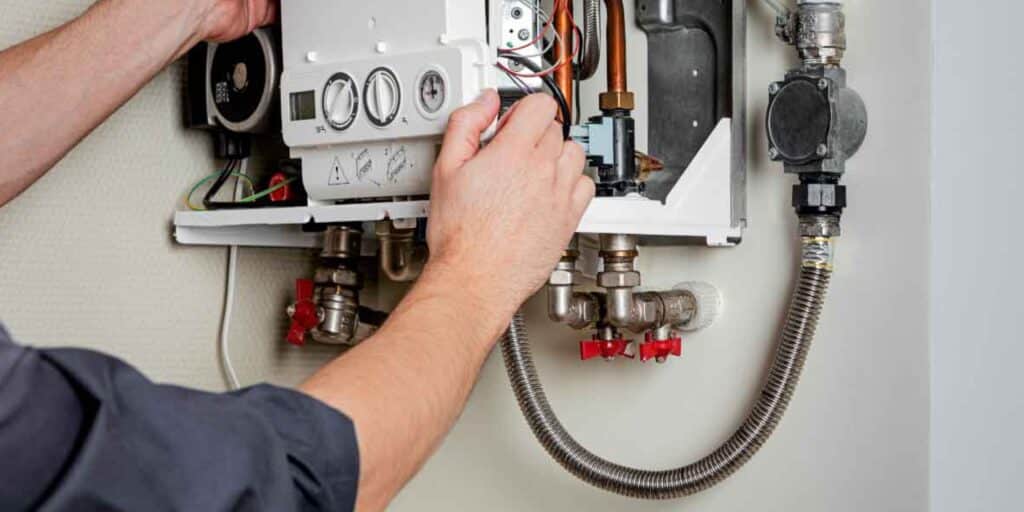
Yes, it is possible to repair a lot of leaking boilers. The repair will depend on the cause of the leak and the timeliness of the detection of the problem.
When the issue is a simple one such as a loose valve, worn seal or a minor pipe problem, a heating technician can normally repair it in a short time and at a low cost. Common boiler repair solutions include replacement of faulty pressure valves or tightening of leaking joints.
High pressure leaks may be easily fixed by changing the pressure settings or changing a faulty pressure relief valve. When this happens, the boiler can still operate effectively several years following the repair.
When the heat exchanger is broken or the internal corrosion is extensive, the cost of repair may be very high. Because the heat exchanger is among the costliest components of the boiler, it might not be always cost-effective to replace it.
Signs Your Boiler Leak Needs Immediate Attention
Not all boiler leakages are emergencies but there are warning signs that cannot be overlooked. Postponing the repairs may add to the harm and pose safety hazards in your house.
Another typical red flag is low boiler pressure. When you are always required to repressurize the system, then there is a possibility of an active leak somewhere in the unit or piping.
In case you smell gas or think that you have been exposed to carbon monoxide, switch off the boiler and call the emergency services or a certified technician. Although leakage of water is not typically a hazardous situation, certain issues with boilers may pose severe safety risks.
Repair vs. Replacement: Which Is Better?
The biggest question that homeowners pose is whether to repair the leaking boiler or to replace it completely. The response is based on a number of critical considerations.
The cost of repair is also an issue. Even a basic repair can be much cheaper than a new boiler. However, when it comes to replacing such significant parts as the heat exchanger, the cost of repair can be high in a short period of time.
Energy efficiency is another factor to consider. The old boilers tend to be less efficient compared to the new ones. The replacement of an old low-efficiency boiler with a new high-efficiency boiler can save on heating expenses and enhance overall performance.
Another indication that replacement might be needed is frequent breakdowns. When your boiler is leaking or needs frequent repairs, it may be more economical to replace the unit in the long run.
How Professionals Repair a Leaking Boiler
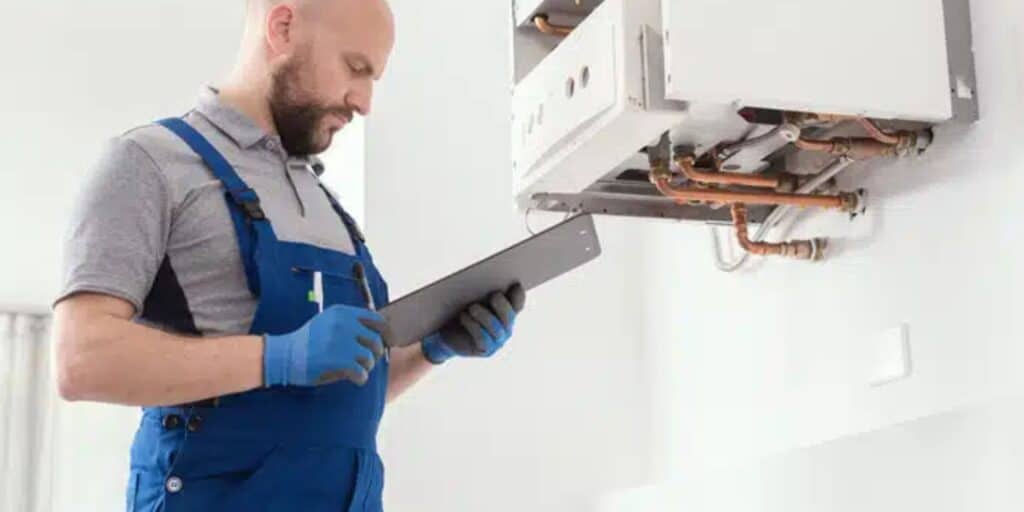
The first step in repairing a boiler is a thorough inspection to find the point of leakage. Due to the presence of numerous valves, pipes, and internal elements in boilers, it is necessary to have professional skills to locate the specific problem.
The technician will initially measure the boiler pressure and examine visible fittings, seals, and joints. In case the leak is caused by a valve or loose connection, the repair can be rather fast.
In case internal parts are broken, the technician might be required to change the pressure relief valve, pump seal or heat exchanger. Fittings or corroded pipes can also be replaced.
Once the repair is done, the technician will test the boiler to make sure that it is safe and efficient. This involves monitoring pressure, water flow and heating efficiency.
Leaks can also be prevented by doing routine maintenance. Boiler servicing should be done annually to enable the technicians to detect the parts that are worn out before they develop into bigger issues.
Boiler leaks should always be repaired by professionals. Trying to do boiler repairs on your own can be risky and can nullify manufacturer warranties.
How to Prevent Boiler Leaks in the Future
One of the most effective methods of maintaining your boiler in good conditions is to schedule an annual inspection. Technicians are able to clean parts, check pressure levels, and detect wear indicators during a service appointment before leaks occur.
Another thing that the homeowner should be aware of is the abnormal sounds, rust, or moisture surrounding the boiler. Small issues can be identified at an early stage to avoid costly repairs in the future.
Lastly, a new energy-efficient boiler can be invested in to minimize the risk of leaks in the future and enhance heating stability. Newer systems are made using better materials and safety measures that contribute to the longevity of the unit.