Choosing a new furnace is a significant investment for homeowners. With rising energy costs, many people want to reduce their heating bills without sacrificing comfort. One of the ways to assist this is by having a high-efficiency furnace that consumes less fuel to generate the same amount of heat as a less efficient one.
However, high-efficiency furnaces typically cost more upfront. So, is a high-efficiency furnace worth the cost? The answer depends on your climate, energy prices, heating needs, and how long you plan to stay in your home.
What Is a High-Efficiency Furnace?
A high efficiency furnace uses a higher proportion of its fuel to produce useful heat. Its efficiency is determined by Annual Fuel Utilization Efficiency (AFUE), which is the amount of fuel energy that is converted to heat during a normal heating season.
For example, a furnace that has a 95% AFUE rating, which uses about 95% of the fuel energy to produce usable heat. In comparison, an 80% AFU furnace transforms approximately 80%.
The AFUE ratings of high-efficiency gas furnaces are usually between 90 and 98.5%. They are designed with many having secondary heat exchangers, variable-speed blowers, and two-stage or modulating burners to enhance performance and ensure stable indoor temperatures.
How Much Does a High-Efficiency Furnace Cost?
High-efficiency furnace prices vary according to the efficiency rating, size, brand and installation needs. Professional installation of furnaces in the United States may range between $3,000 and $7,500 or more, and high-efficiency models are frequently more expensive than standard systems.
Factors affecting the total cost include:
Efficiency rating: More efficient models are pricier.
Installation labor: The costs depend on the contractor and location.
Venting requirements: Some models require specialized venting and condensate drainage.
Additional features: Variable-speed blowers and modulating burners can increase the price.
Although the initial investment is higher, lower energy use can pay off in the long run. Get several quotes to compare equipment, labor, warranties, and installation services.
How Much Can You Save on Energy Bills?
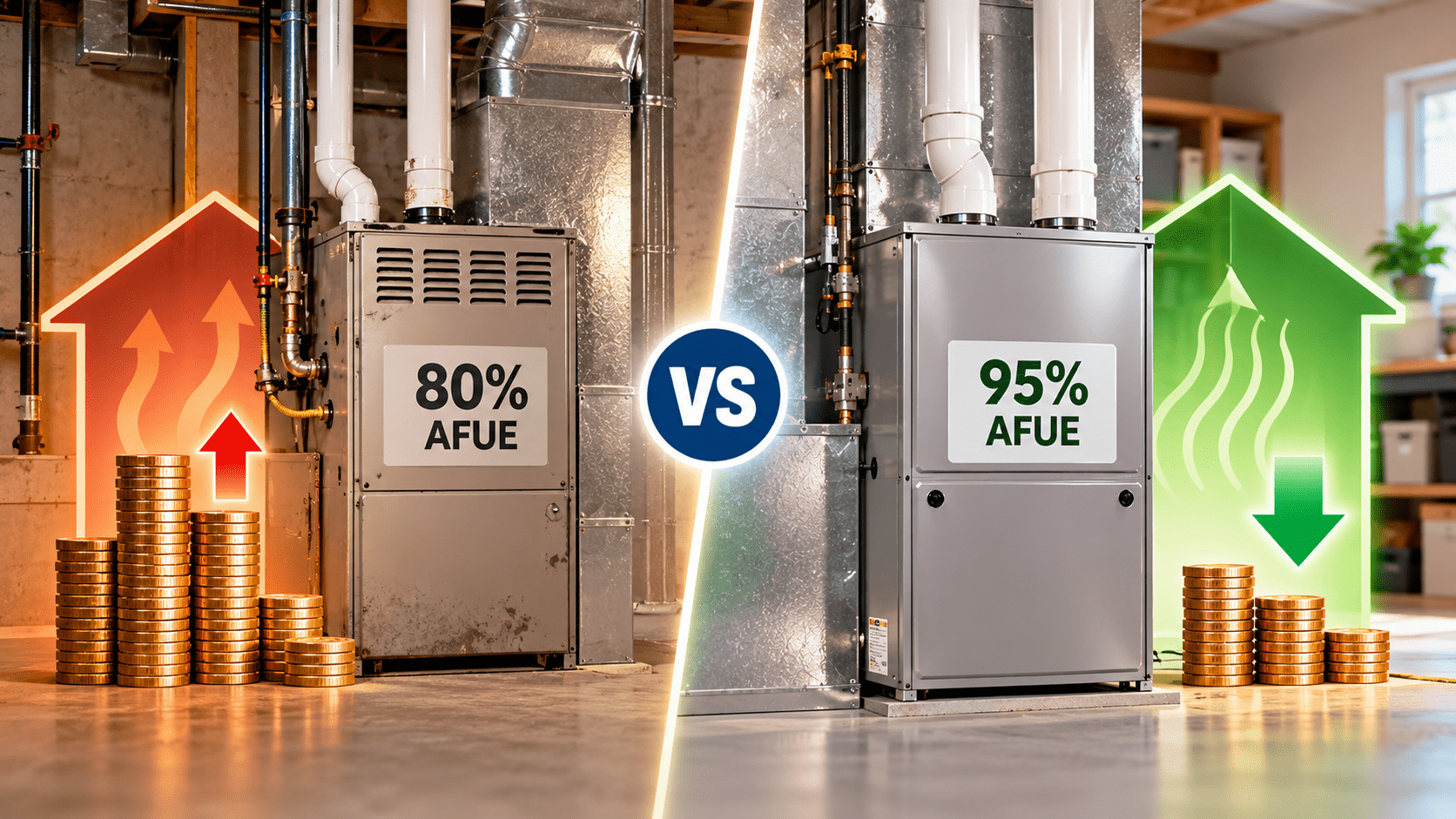
A high-efficiency furnace has one of the greatest benefits in that it can reduce heating expenses. Since it consumes less fuel, it is able to give the same amount of heat with less consumption of natural gas.
For example, suppose your current 80% AFUE furnace costs $1,500 annually in heating fuel. Replacing it with a 95% AFUE model could reduce that cost by approximately $237 per year, assuming similar heating demand and fuel prices.
Actual savings depend on your climate, thermostat settings, insulation, fuel rates and furnace usage. Homeowners in colder regions may benefit more because they use their heating systems more frequently. In warmer climates, the savings may be too small to justify a significantly higher purchase price.
What Are the Benefits of a High-Efficiency Furnace?
A high-efficiency furnace offers several advantages beyond lower energy bills.
Lower fuel consumption: Better efficiency means that you can reduce the usage of fuel to heat your house.
Better comfort: Two-stage and modulating systems can maintain more consistent indoor temperatures.
Quieter operation: Variable-speed blowers may operate more quietly than conventional blower systems.
Reduced emissions: Burning less natural gas for the same heating output can lower fuel-related carbon dioxide emissions.
Potential resale value: A well-maintained, efficient furnace can appeal to energy-conscious homebuyers.
These advantages render high-efficiency furnaces attractive to homeowners who value comfort, energy efficiency, and durability.
What Are the Disadvantages?
The biggest disadvantage is the higher upfront cost. If your existing furnace works well and your heating bills are already low, upgrading may not deliver enough savings to justify replacing it early.
Installation may also be more complicated since some high-efficiency models may need special venting and condensate drainage. Such needs may raise the cost of labor.
Regular maintenance is essential, too. Filter replacement, professional maintenance, and adequate drainage can ensure performance and minimize unnecessary repairs.
Additionally, the payback period of homeowners in mild climates can be longer since their heating costs are not high annually.
How to Calculate the Payback Period
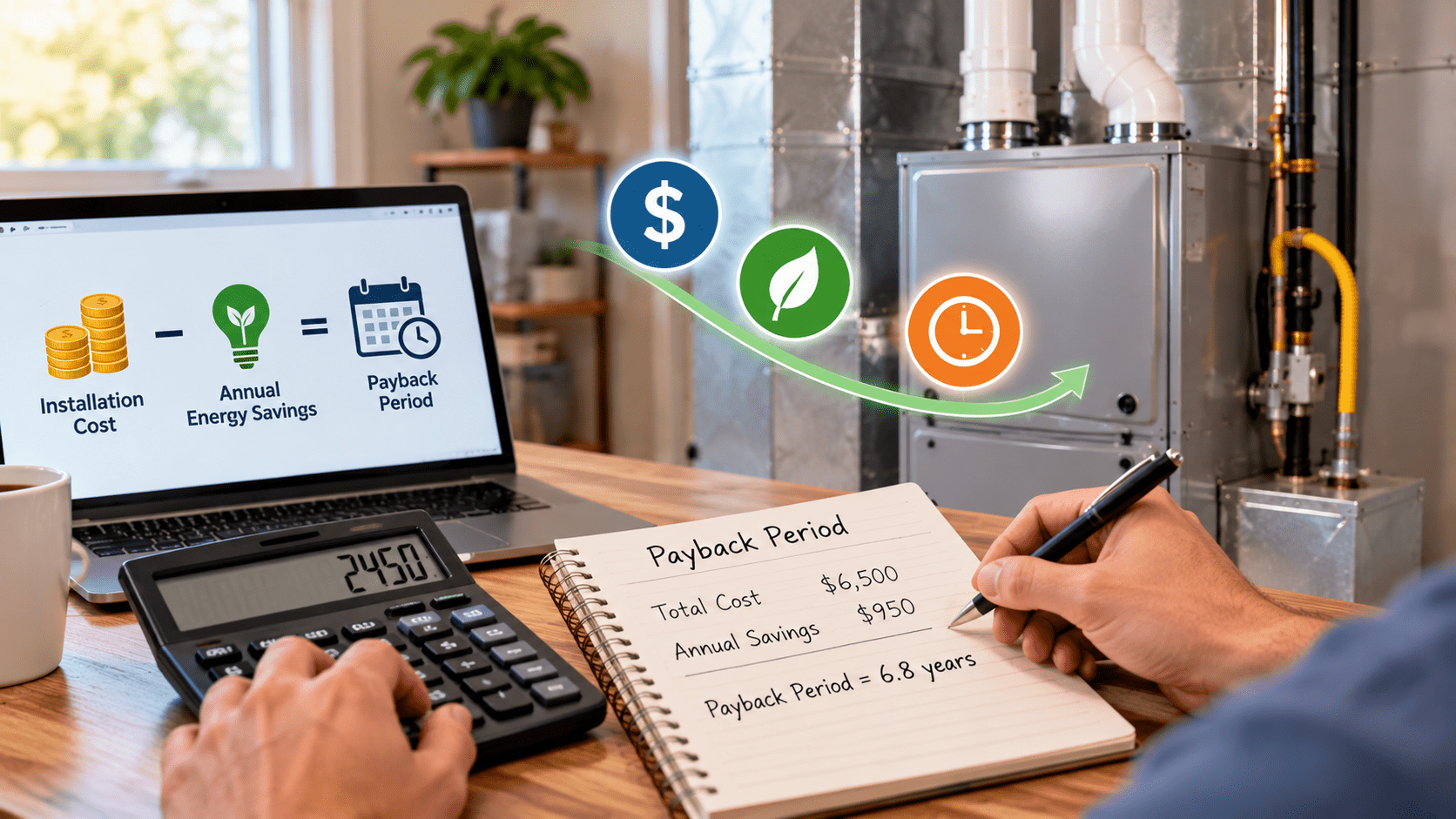
The payback period tells you how long it may take for energy savings to recover the additional upfront cost of a high-efficiency furnace.
To calculate it, divide the extra cost of choosing the high-efficiency model by the expected annual energy savings.
Payback period = Additional upfront cost ÷ Annual energy savings
For example, if a high-efficiency furnace costs $1,500 more than a comparable model and saves $300 annually, the payback period is five years.
This estimate does not include financing costs, maintenance differences, repairs, and altering energy prices. Your actual results may vary.
The higher investment can be justified by the savings in case you intend to remain in your home within a period of ten years or more. A cheaper model might be more suitable in case you are planning to relocate in the near future.
Is a High-Efficiency Furnace Worth the Cost?
A high-efficiency furnace is also worth the price to many homeowners as it can save them on energy bills, make them more comfortable and save them on fuel usage in the long run.
It is especially useful to households in colder regions, houses with high heating costs, and homeowners intending to remain in their houses over a few years. The investment can be more appealing by replacing an old and inefficient furnace.
But the most effective model does not necessarily make the best financial decision. Low heating demand homeowners can save more by opting to use a moderately efficient furnace with a lower cost of installation.
Get at least three estimates of qualified HVAC contractors before making a decision. Inquire about furnace size, AFU ratings, cost of installation, warranty, and the approximate operating costs. Also, check for current utility rebates and applicable incentives.
A high-efficiency furnace can be a good long-term investment when its energy savings exceed the extra initial expense. Look at your weather, heating costs, and the number of years you are likely to stay in your house to decide whether upgrading is the correct option to your budget.