When the weather changes to colder, your furnace is necessary to warm your home and make it comfortable. Nevertheless, it is possible to find out about a heating issue only in winter and have to deal with unexpected failures, high costs of repairs, and unpleasant indoor climate.
Following a furnace repair checklist for winter helps you identify potential issues early, improve heating efficiency, and prepare your system for colder weather. Whether you use a gas furnace or an electric furnace, regular maintenance can help prevent common problems and support reliable performance.
Here are the essential steps to check your furnace before winter arrives.
Check and Replace the Furnace Air Filter

A clogged air filter limits airflow, which makes your furnace to work harder to warm your home. This can contribute to increased energy bills, lopsided heating and excessive heating.
What to check:
- Inspect the filter against dust, dirt and pet hair.
- Change disposable filters as per the recommendation of the manufacturer.
- Wash reusable filters according to instructions.
- Confirm that the new filter fits well in your furnace.
Check your filter once a month when it is used intensively. A clean filter facilitates good air circulation and enables your heating system to work effectively.
Inspect the Thermostat
Your thermostat regulates the switching on and off of your furnace. Your home may fail to achieve the desired temperature due to incorrect settings, weak batteries or faulty thermostat.
Before calling for furnace repair, make sure the thermostat is set to Heat. Check the temperature setting, replace batteries if needed, and verify that the programmed schedule is correct.
If your furnace fails to react when the thermostat requests heat, the problem may be with the thermostat, electrical connections, or furnace controls. The cause can be determined by a qualified HVAC technician.
Listen for Unusual Furnace Noises
Unusual sounds can indicate mechanical problems that require attention. While normal operating sounds are expected, persistent banging, grinding, squealing, or rattling should not be ignored.
Banging: May indicate loose parts or an ignition problem.
Grinding: Could signal a motor or moving-part problem.
Squealing: May indicate worn bearings or blower problems.
Rattling: Could result from loose panels or ductwork.
If you notice new or worsening noises, arrange a professional inspection. Avoid opening the furnace or attempting repairs on internal components yourself.
Inspect Vents and Airflow
Obstructed vents may not allow warm air to flow freely in your house. Consequently, certain rooms might be colder than others, despite the furnace being on.
Inspect your house and examine all the supply registers and return vents available. Clear the vent covers and clear furniture, curtains, and rugs that block airflow.
When the uneven heating is sustained, the issue may be in the form of leaking ducts, imbalanced airflow, insufficient insulation, or a malfunctioning furnace. The root cause can be ascertained with the assistance of an HVAC expert.
Check the Ignition System
Gas furnaces use either an electronic ignition system or a standing pilot light. If your furnace fails to start, repeatedly shuts down, or struggles to produce heat, the ignition system may need attention.
Look at the furnace display to confirm that there are no error codes or warning lights and refer to the owner manual. In case your model has a pilot light that is visible, then follow the instructions of the manufacturer.
Never disassemble ignition parts or make attempts at repairing gas lines. In case of gas smell, get out of the building without switching electrical switches or using open fires. Contact your gas company or ambulance in a secure place.
Inspect Exhaust Vents and Safety Equipment
Combustion gases emitted by gas furnaces need to be safely released into the air. Broken or clogged exhaust vents may pose hazardous situations, such as carbon monoxide.
Physically examine available venting elements to identify apparent harm or blockages. Keep outdoor exhaust openings clear of snow, ice, leaves, and debris according to the manufacturer’s instructions.
Place carbon monoxide detectors around sleeping spaces and on each floor of your house, as per the local regulations. Test them regularly.
In case of the sounding of a carbon monoxide alarm, it is necessary to exit the building and call emergency services outside. Do not go back until the authorities are sure it is safe.
Check Electrical Components
Both electric and gas furnaces are based on electrical components. Heating can be interrupted by problems with circuit breakers, wiring, blower motors, or safety controls.
Ensure that your furnace is on and that exterior panels that are accessible are not locked. When the circuit breaker is tripping, do not reset it again, call a qualified technician.
Do not touch internal wiring or access panels when troubleshooting. Trained professionals should carry out electrical inspections and repairs.
Schedule Professional Furnace Maintenance
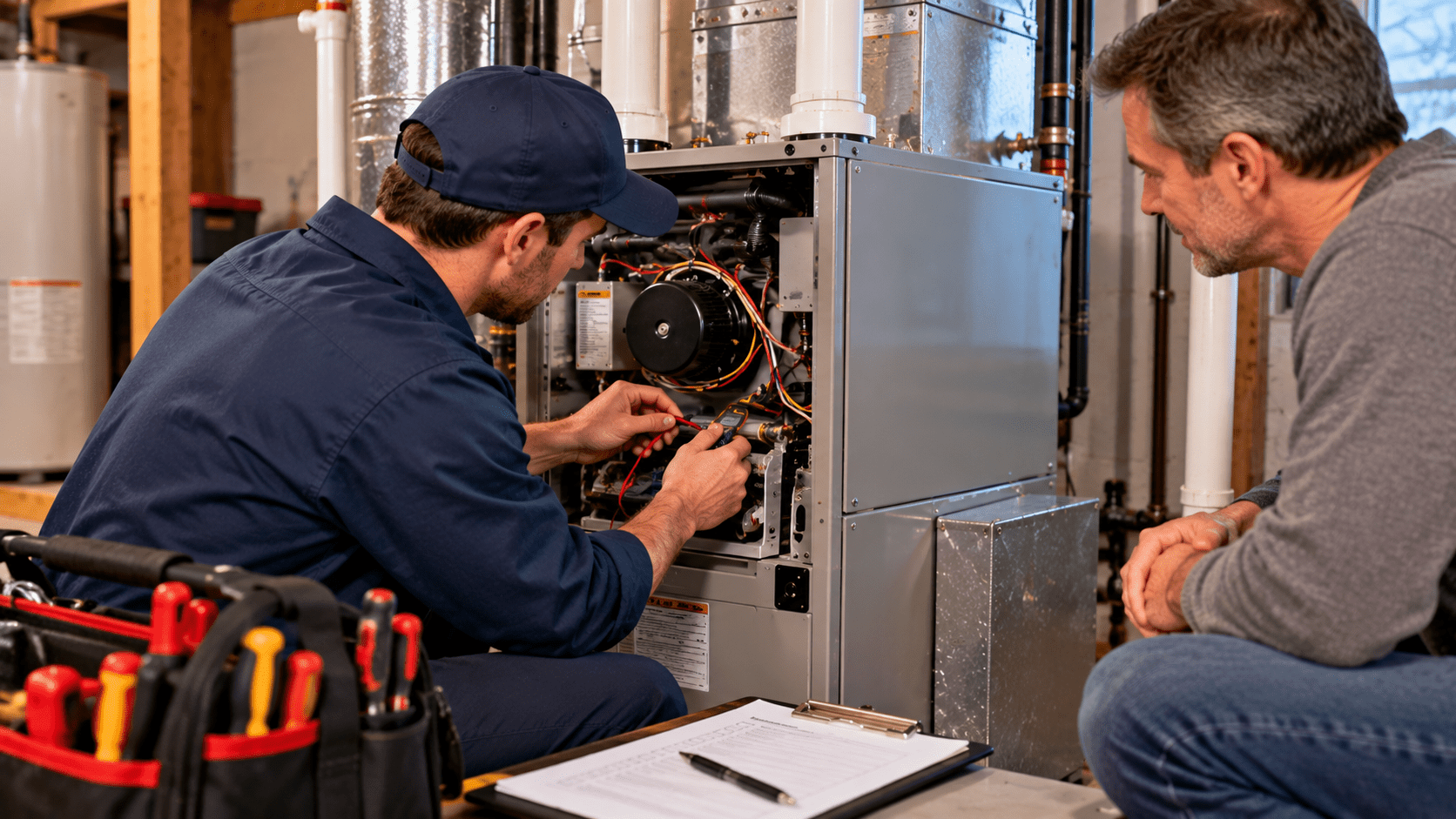
A professional inspection is one of the most effective ways to prepare your furnace for winter. Simple inspections can be done by the homeowners, yet the technicians are trained and equipped to detect concealed issues.
A furnace maintenance appointment may include:
- Checking the heat exchanger to see whether it is damaged.
- Inspecting burners and ignition parts.
- Checking safety controls and electric connections.
- Checking the airflow and the blower assembly.
- Assessment of combustion and exhaust venting.
- Determining the parts that are worn out and need repair.
Schedule maintenance before temperatures drop significantly. If your furnace already presents warning signs, make a request to have it repaired rather than waiting until it is serviced regularly.
When Should You Call for Furnace Repair?
Contact an HVAC technician if your furnace blows cold air, repeatedly shuts down, struggles to heat your home, makes unusual noises, or causes unexpectedly high energy bills.
The burning odors, the presence of smoke, electrical overheating, and the frequent operation of breakers are also to be addressed immediately. Switch off the system when it is safe to do so and consult with professionals.
If you suspect a gas leak or carbon monoxide exposure, evacuate immediately and contact emergency services.
Keep Your Furnace Winter-Ready
Following a furnace repair checklist for winter helps you identify common heating problems before they become costly emergencies. Checking filters, testing the thermostat, inspecting vents, listening for unusual noises, and maintaining clear exhaust openings are practical ways to prepare your furnace for colder weather.
However, basic maintenance cannot replace professional servicing. A qualified HVAC technician can identify hidden issues, verify safe operation, and recommend necessary repairs.