An air conditioner keeps your home comfortable during hot weather. However, when it stops cooling, makes unusual noises, or refuses to start, the compressor may be the problem. Since the compressor is one of the most expensive parts of an air conditioning system, many homeowners ask: Can a broken AC compressor be repaired, or does it need to be replaced?
The answer depends on the cause and severity of the damage. Some compressor-related problems can be fixed without replacing the compressor, while serious internal damage usually requires a replacement.
What Does an AC Compressor Do?
The AC compressor is an essential part of your air conditioning system. It moves refrigerant between the indoor and the outdoor units and thus the system is able to move the heat in and out of your home.
When the compressor works properly, your air conditioner can cool your home efficiently. However, if it fails, the cooling process may stop or become less effective.
Because the compressor contains electrical parts, pressurized refrigerant, and moving parts, it is a complex part to diagnose and repair, and it needs special tools and professional skills.
Can a Broken AC Compressor Be Repaired?
Yes, it is possible to repair an AC compressor, but not all failures can be repaired. The trick is to find out whether the compressor is broken or if there is another part that is not allowing it to operate.
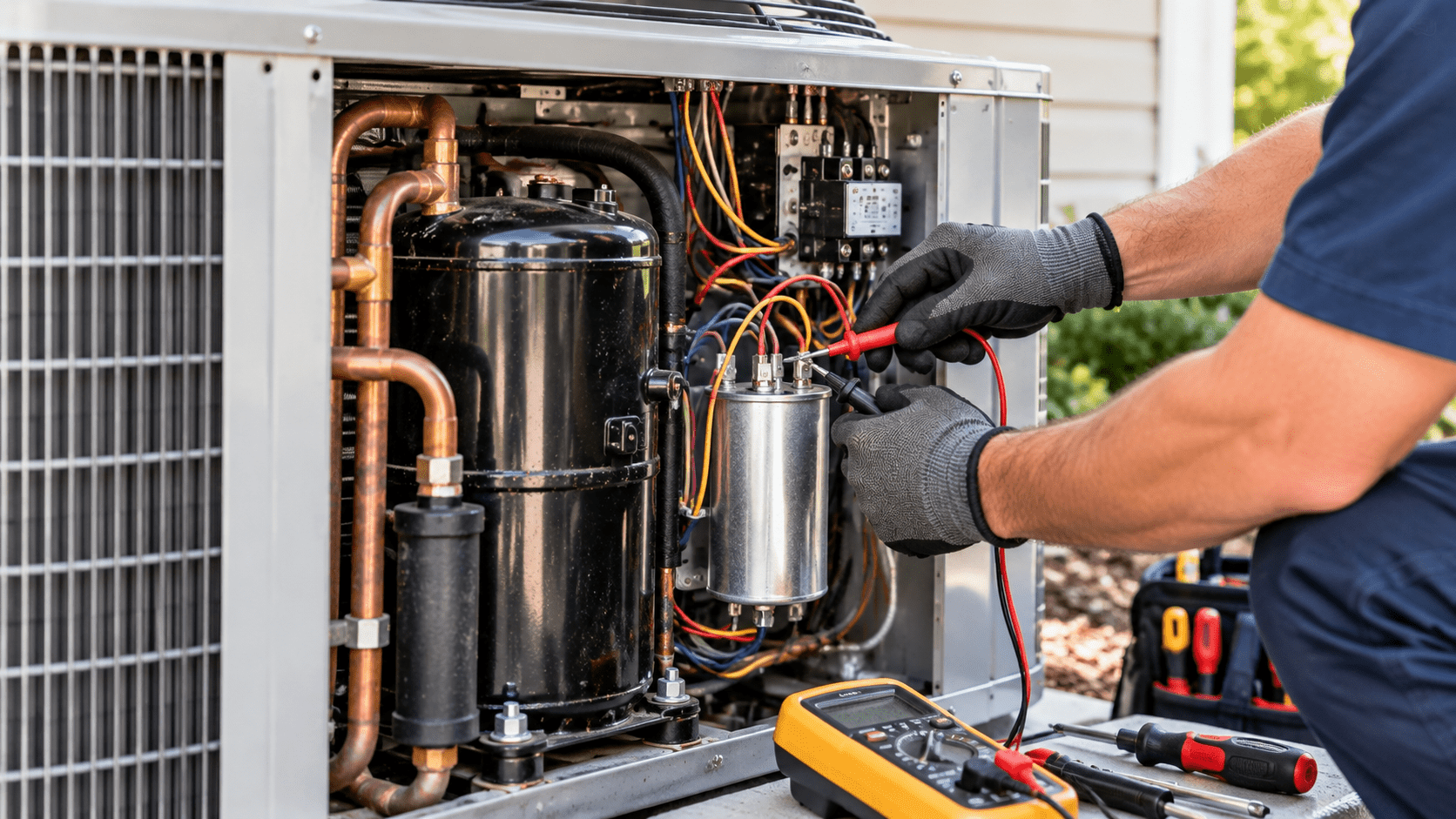
In the event that the issue is a faulty capacitor, damaged wiring, a faulty contactor, or other external electrical problem, a technician can fix normal operation without replacing the compressor.
However, severe internal damage, such as a seized motor or burned-out windings, often makes replacement the more practical option.
When Can an AC Compressor Be Repaired?
Several problems can affect compressor operation without requiring a new compressor:
Faulty capacitor: A failed start or run capacitor can cause the compressor to not start. The issue can be addressed by replacing it in case the compressor is in a good condition.
Electrical problems: Loose connections, damaged wiring, or a faulty contactor can interrupt power to the compressor. Repairing these components may restore normal operation.
Overheating: Dirty condenser coils, limited airflow or other working issues. Fixing the root cause can help to avoid additional harm.
Refrigerant issues: Incorrect refrigerant levels or system restrictions can affect compressor performance. A qualified technician can identify and address the cause.
Control system faults: A faulty thermostat, sensor, or control board may prevent the compressor from running correctly.
These issues do not automatically mean the compressor has failed. Proper diagnosis can help you avoid an unnecessary replacement.
When Does an AC Compressor Need Replacement?
An AC compressor generally needs replacement when its internal components are severely damaged.
Some examples are a seized compressor, severe mechanical breakdown, and melted windings on the motor. There can also be a lot of internal damage that can contaminate the refrigerant circuit with debris, necessitating further cleaning and repair.
In these situations, repairing the compressor may be unreliable or more expensive than replacing it. A technician should also identify the original cause of failure to help prevent the replacement compressor from suffering the same problem.
Signs of a Bad AC Compressor
Recognizing the warning signs of a failing compressor can help you arrange repairs before the problem becomes more serious.
Warm Air From the Vents
If your AC runs but blows warm air, the compressor could be malfunctioning. However, low refrigerant, dirty coils, and restricted airflow can cause similar symptoms.
Unusual Noises
Outdoor unit grinding, loud humming, buzzing, or rattling can be signs of compressor problems. A faulty fan motor or loose parts can also be the source of these noises.
Frequent Circuit Breaker Trips
The circuit breaker can be tripped by a compressor that is overloading electrical current. It could be caused by a faulty capacitor, electrical fault, or a seized compressor. When the breaker is tripping off and on again, do not reset the breaker and call an HVAC professional.
The Outdoor Unit Will Not Start
When the outdoor unit fails to work, then the compressor might not be getting power or it might not start. The actual cause may be a faulty contactor, capacitor or control component.
Poor Cooling Performance
When your home is taking longer than normal to cool, then there is a possibility that the compressor is not operating efficiently. Nevertheless, other system or maintenance issues ought to be examined.
These symptoms do not confirm compressor failure on their own. Professional testing can identify the actual problem.
How Much Does It Cost to Repair an AC Compressor?
AC compressor repair costs depend on the type of air conditioner, the cause of the problem, labor rates, and the availability of parts.
Minor repairs, including changing a capacitor or repairing an electrical connection, usually cost less than changing the compressor.
Compressor replacement can be expensive because it involves removing the old unit, installing the replacement, handling refrigerant, and testing the system. Additional repairs may increase the total cost.
Ask your HVAC technician for an itemized estimate covering parts, labor, refrigerant, and any necessary additional work. Comparing the estimate with the age and overall conditio of your AC can help you choose the most economical option.
Should You Repair or Replace Your AC Compressor?
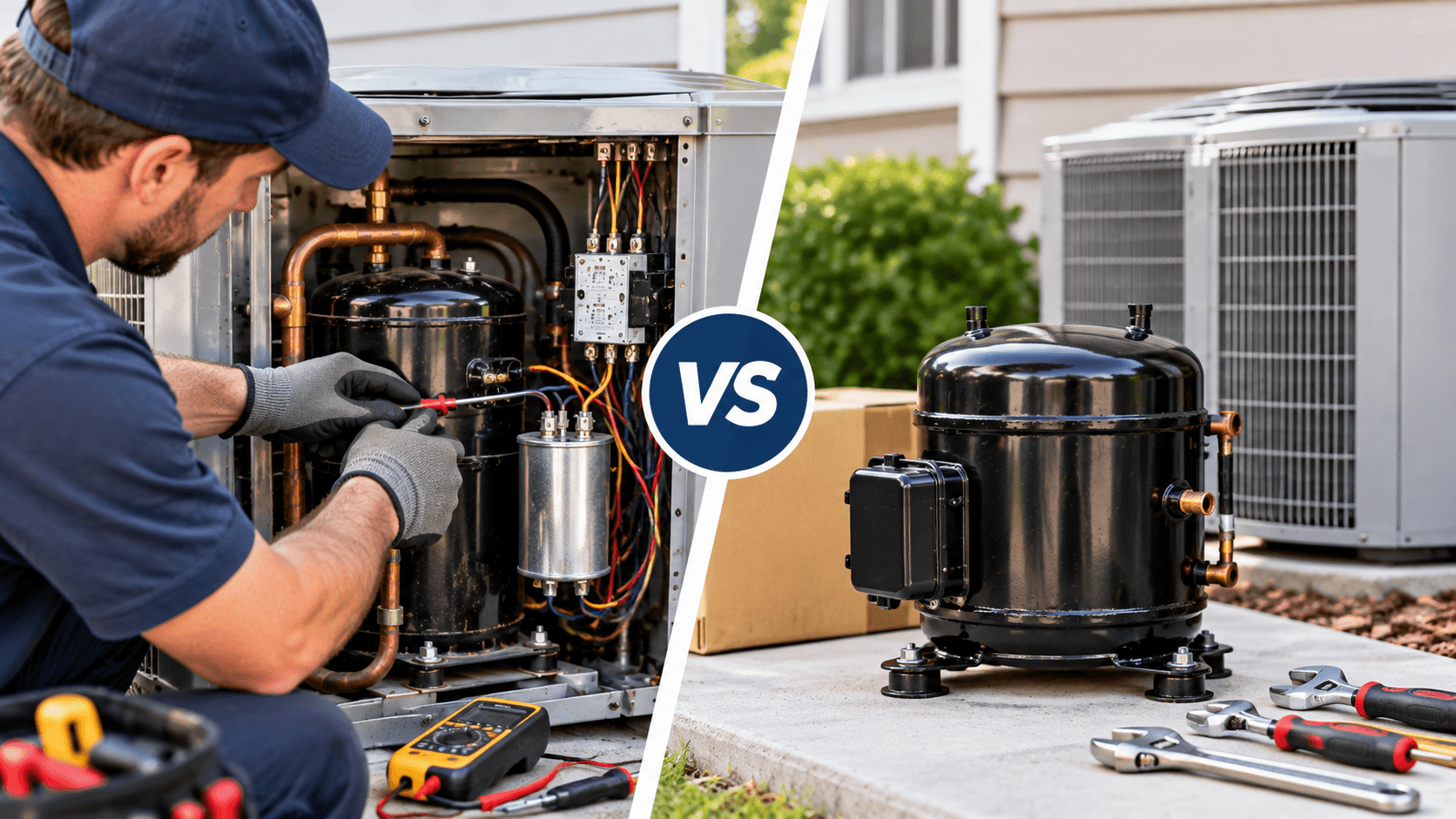
Consider these factors before deciding:
Age of the system: Repairing a relatively new air conditioner may be worthwhile if the rest of the system is in good condition.
Severity of damage: Minor electrical issues are more suitable to repair as compared to severe internal damages.
Warranty coverage: Check whether the compressor is covered by the manufacturer’s warranty. Labor and refrigerant costs may not be included.
Overall condition: If your AC experiences frequent breakdowns or has other major problems, replacing the entire system may be more practical.
Repair price: Before deciding on what to do, compare the cost of replacing the compressor with the cost of a new air conditioner.
A qualified HVAC technician can assess these factors and recommend the best solution for your home.
How to Prevent AC Compressor Failure
Regular maintenance can help extend compressor life and reduce unexpected breakdowns.
- Always change air filters to ensure that there is a good flow of air.
- Clean and maintain coils of outdoor condensers.
- Arrange professional maintenance of AC to detect emerging issues.
- Do not block vents and return grilles.
- Respond to abnormal sounds, overheating, and diminished cooling.
Although maintenance cannot prevent every failure, it can improve system performance and reduce unnecessary strain on the compressor.